
The Falkland Islands
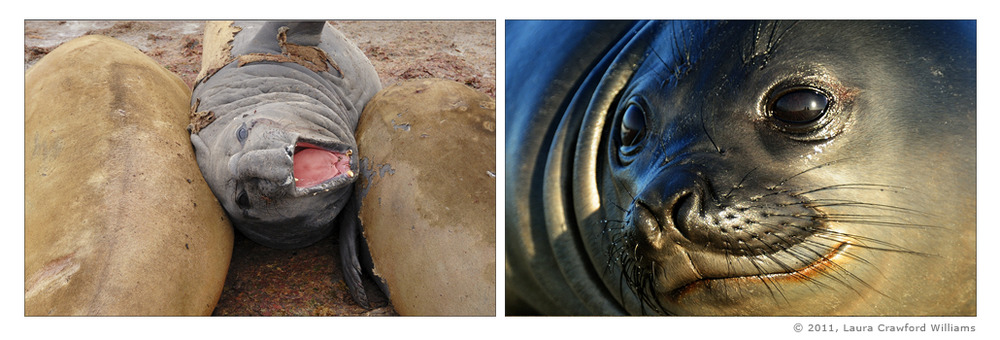
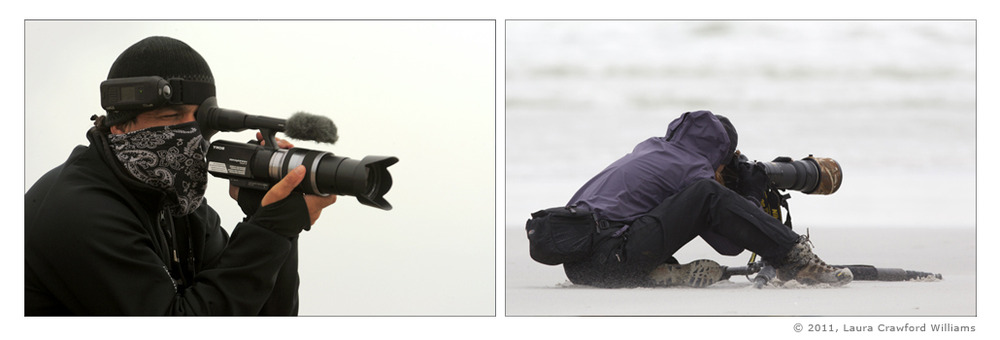
As I write this, it’s summer in December and I’m in the Falkland Islands. German and I are sitting along a stretch of beach on Sea Lion Island. The sand is white and the water Caribbean blue. You might assume that white beaches and clear blue water could equal swimsuits and pina coladas, but not here! It’s very cold and extremely windy. We’re in the land of penguins, albatross, and elephant seals…

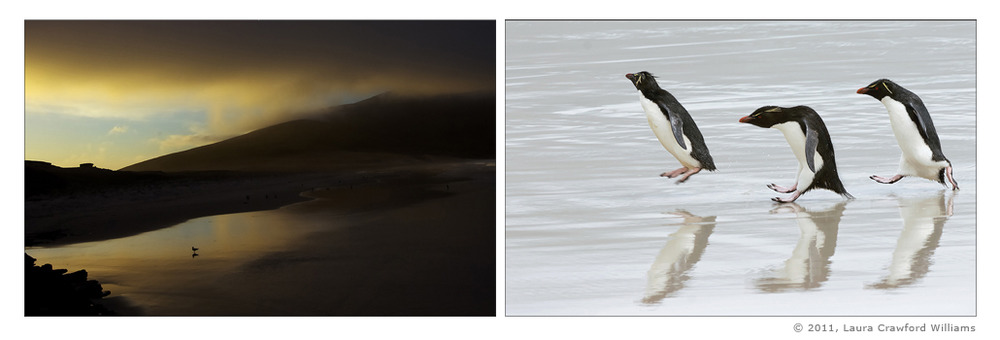
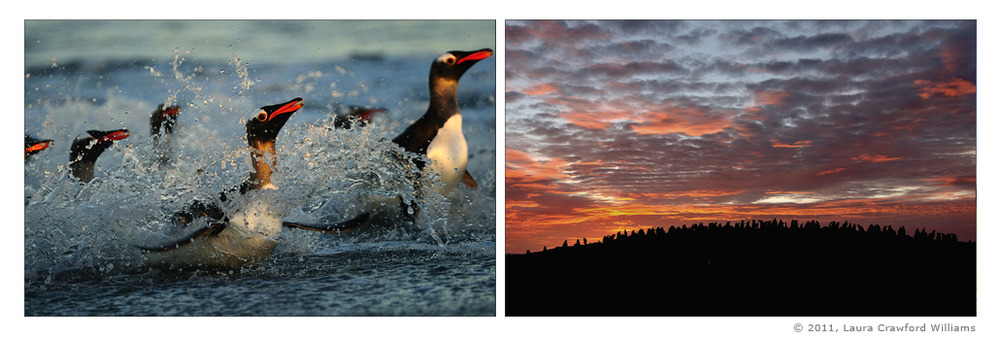
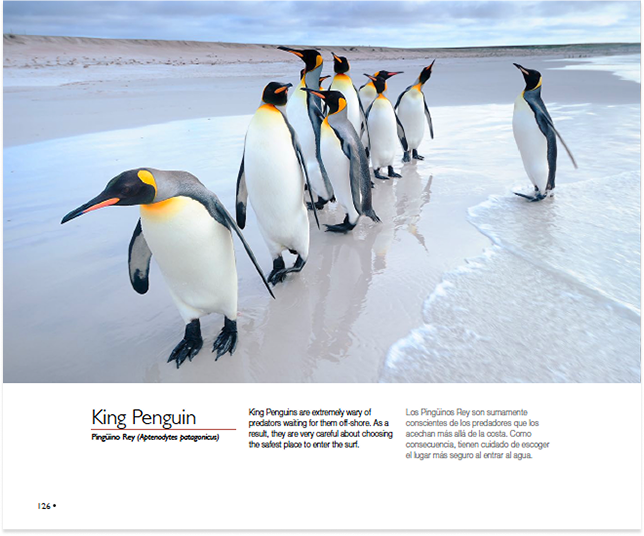
Despite the weather, something amazing is happening in front of us. A large male Southern Sea Lion is swimming up and down the shoreline, hunting Gentoo Penguins. Hundreds of Gentoos are swimming just beyond the shallows, waiting to come inland. They know the sea lion is here and that he’s waiting to snatch them. Last night, we watched him catch seven penguins. This is an amazingly sad experience, but exciting at the same time. You find yourself praying that the penguins escape but then fanatically photographing the moment when they’re caught. It’s an extremely violent moment and I find myself feeling those hopelessly conflicted feelings again.

To me, the Falkland Islands are a magical place, despite its brutal beauty. This is my second visit. I love it because it’s one of the few locations where you can wander among wildlife unhindered: trusted that you will respect the animals and enjoy the gift of solitude in wilderness.

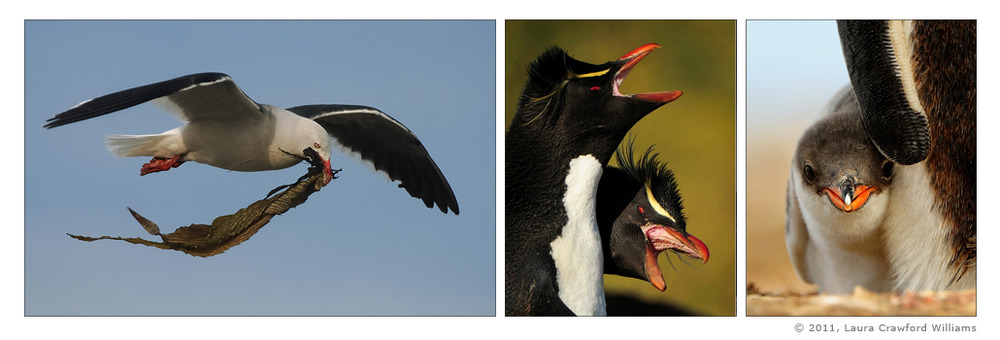
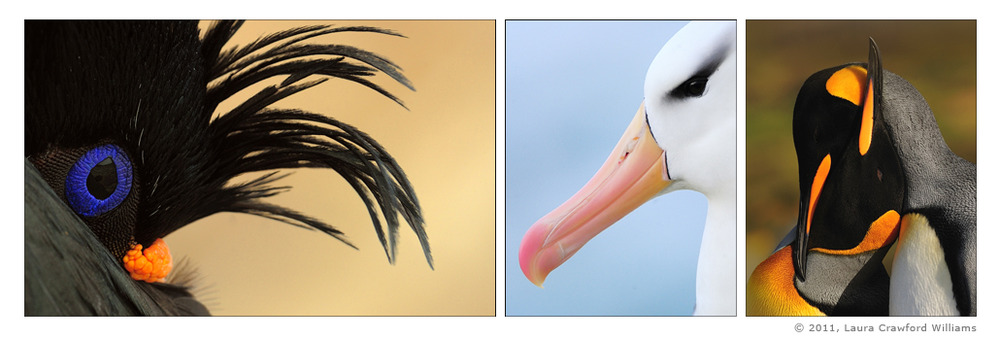
The animals in the Falklands are unafraid on land. They evolved without many land predators and are trusting to a fault. Penguins are especially curious. If you sit near a colony and remain somewhat still, they will come to greet you – each sideways glance a prelude to closer inspection. This is true of many of the animals, birds and mammals alike. The islands themselves are mostly treeless. Native shrubs like the compact Diddle-Dee and the fountain-like Tussock Grass dominate the landscape. The terrain is rolling. There are unique geographical features called ‘rock runs’ that flow down from the top of higher hills. Tall, sharp cliffs also rise from the sea.

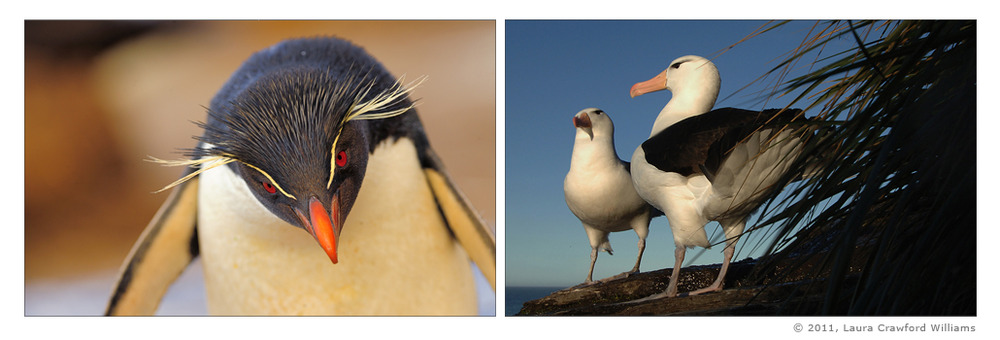
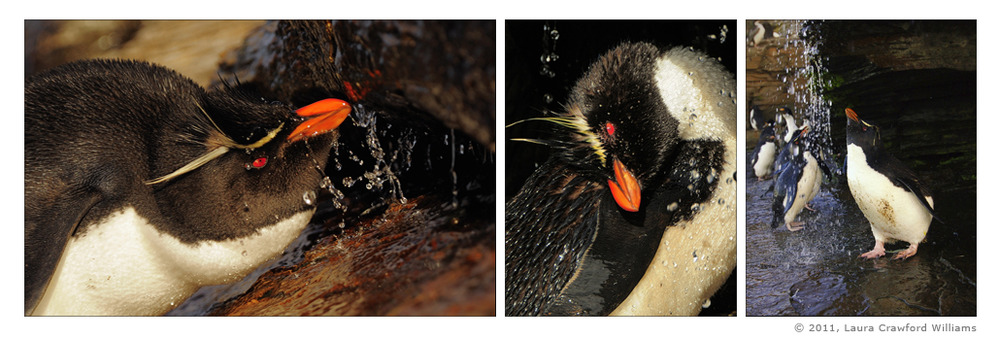
One of my favorite locations is on Saunders Island at a place called the Rookery. There’s a large Rockhopper Penguin colony that stretches high upon the hill. Near the colony is a fresh water spring. All day long, the Rockhoppers walk, run, or hop to the spring, hunched over like little old men with big pink feet. The nails at the end of each toe allow them to climb up steep rocks in order to come to an area where fresh water drips like a waterfall. It’s known as the ‘penguin shower’ and is a must see location if you ever visit. Penguins stand in line as they wait for their turn in the shower. If a penguin takes too long cleaning up, waiting penguins gang up upon them and they are chased away so that others may take their turn. We witness very human behavior in a similarly human situation.
The idea of traveling through the Falklands with German, a 42-year-old ex-marine corps Argentinean was intriguing to me. I didn’t know what to expect. German had never been to the Falklands and he was only a child when the Falklands War began. Argentine history is branded with scars from this war. The same is true for people in the Falklands. I visited the Falklands in 2005 and was surprised at that time to hear so many stories about the war, personal stories from the locals I met along the way. For some, there was a great deal of resentment and unhealed emotional scars. For others, it was simply a sad situation. However, there’s no way to escape the history. Evidence of the war is hard to ignore in the Falklands. Thousands of acres are still filled with land mines. British as well as Argentine war memorials and cemeteries are on all major islands. The crashed remains of helicopters and other aircraft can still be seen. Impact craters gouge the landscape near battlefield trenches that still contain rotting ponchos. Locals are more than happy to relate their experiences, whether you ask them to or not. I think all that we saw and heard relating to the war touched German more strongly than he’d imagined. For me, it was an incredible learning experience. One of those moments that give perspective and appreciation for your own life situation. Still, the point of this adventure and of this blog is not to focus on the Falklands War. It’s to celebrate the beauty of the islands and their endemic species.
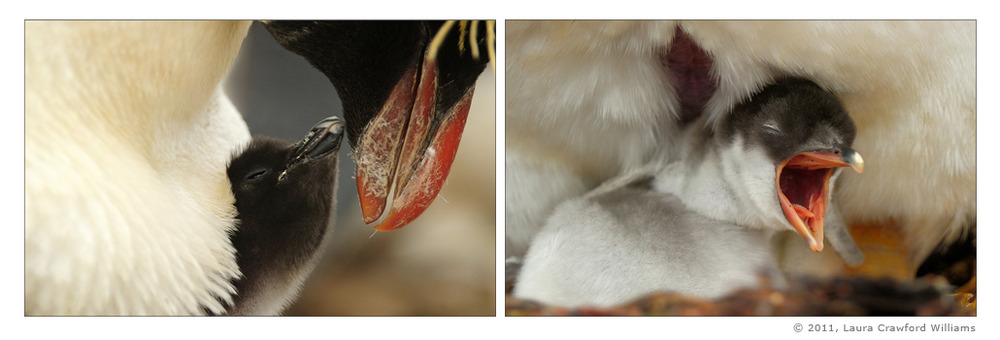
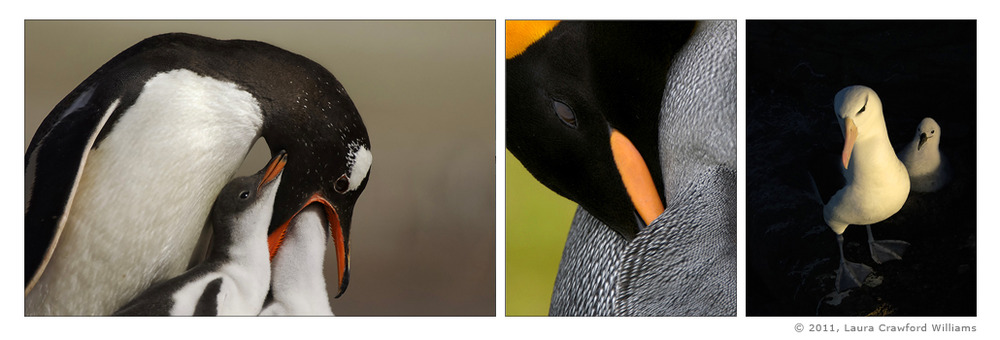
It was a great time of year to be in the Falklands. Most waterfowl were paired-off and escorting newly hatched, buoyant balls of fluff. Chicks were everywhere. Ruddy-headed Geese, Upland Geese, Kelp Geese, Falkland Flightless Steamerducks, Crested Ducks, and White-tufted Grebes were all herding around newly hatched babies. Gentoo and Rockhopper Penguin eggs began hatching during our second week, while Rufus–chested Dotterals, Black-browed Albatross, and Oystercatchers mostly were sitting on eggs. We also saw Dolphin Gulls and Arctic Terns gathering nesting material in preparation for their own nesting season.

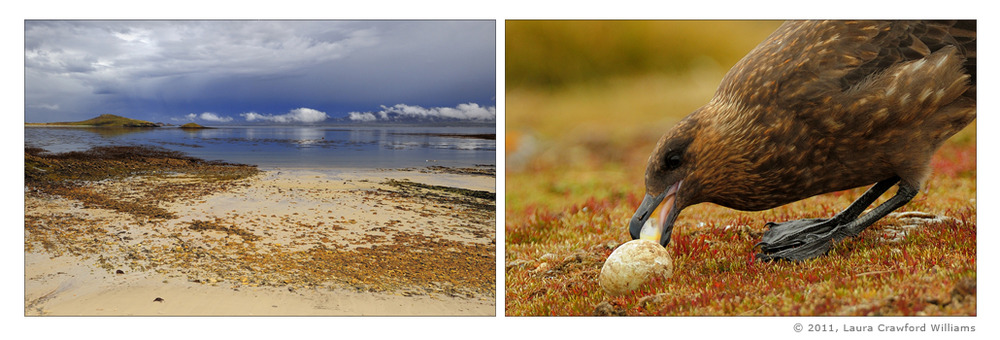
I applaud the people of the Falkland Islands for managing to keep tourism small and controlled. This could easily become a location similar to the Galapagos Islands. Too many people require too many restrictions. The Falklands tourism board intentionally works to keep tourist numbers regulated so that visitors are able to have a unique and special experience. Most people I talked with want that balance. On each island, I was told that the goal is to provide a quiet, intimate experience without crowds or too many regulations. I hope they’re able to keep this balance.
Unfortunately, money and conservation are often at odds. Cruise ships have begun coming, bringing 300 people at a time to walk freely among penguin colonies. Eventually, it will be too much and most of the locals are afraid of this. History shows us that the temptation of money is strong. I hope that the people living in the Falkland Islands prove that to be wrong!